Niger General Tchiani names himself as head of Transitional Government After Coup
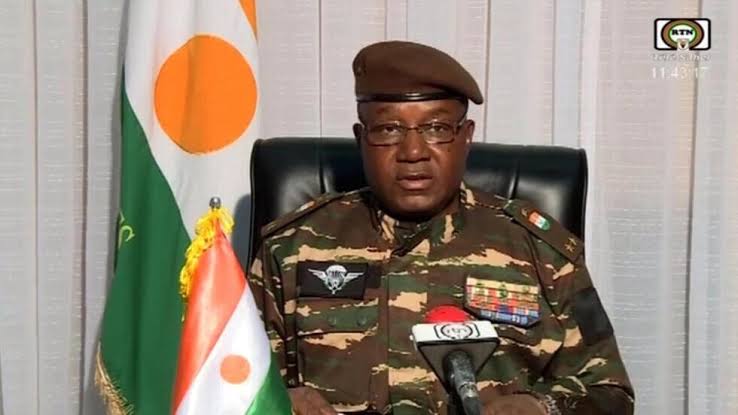
Abdourahmane Tchiani, the head of Niger’s presidential guard, has declared himself the leader of a transitional government in Niger, just two days after his guards detained and overthrew the democratically elected President, Mohamed Bazoum.
Addressing the nation on state-run television on Friday, July 28, Tchiani proclaimed himself as the “president of the National Council for the Safeguard of the Homeland.” He justified the intervention by stating that it was necessary to prevent the country from facing a “gradual and inevitable demise.”
The 62-year-old general assumed command of the elite unit back in 2015 and hails from Niger’s western region of Tillaberi, which is known to be a significant recruitment area for the country’s army.
Tchiani’s rise to prominence was further solidified when he reportedly led the resistance against a failed coup attempt in March 2021. During that incident, a military unit attempted to seize the presidential palace just days before President Bazoum, who had recently won the elections, was set to be sworn in.
This time, on Wednesday, Tchiani’s unit successfully detained President Bazoum within the presidential palace in Niamey, the nation’s capital. This action immediately drew widespread condemnation from leaders both within Africa and beyond.
Colonel Amadou Abdramane, the spokesperson of the Nigerien army, appeared on state TV on Wednesday, explaining that the security forces had taken this drastic step to “put an end to the regime that you know due to the deteriorating security situation and bad governance.”
In response to the coup, Niger’s borders were closed, and a nationwide curfew was imposed, with all institutions of the republic suspended. The soldiers also issued a warning against any foreign intervention, asserting that they would ensure President Bazoum’s well-being.
Despite the upheaval and uncertainty, President Bazoum remained defiant and expressed his determination to protect the hard-won gains in democracy that the country had achieved. He conveyed his message to the people via the social media platform X (formerly known as Twitter) in the early hours of Thursday.
This unfortunate coup marks the fifth successful overthrow of power in Niger since the country gained independence from France. The international community is closely monitoring the situation, with leaders from various countries expressing their concern and support for the restoration of democratic norms in the West African nation.
As events continue to unfold, the people of Niger and the world at large are anxiously awaiting further developments to see whether the country can swiftly return to democratic governance or if it will face an extended period of uncertainty and turmoil. The future of Niger’s political landscape remains deeply uncertain, and only time will tell how this situation will ultimately unfold.